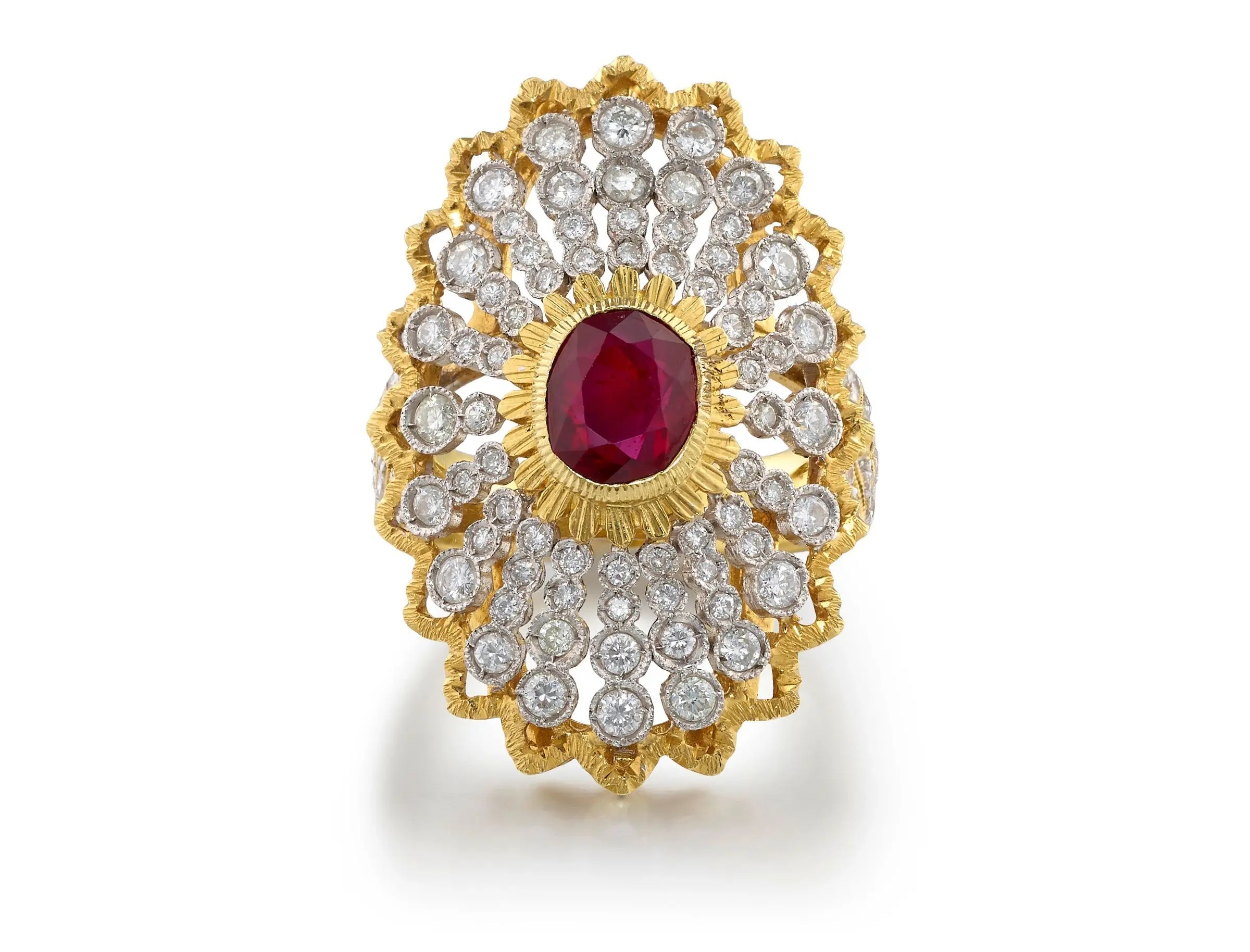
July's Birthstone
Few gemstones capture attention quite like a ruby. With its rich red color and fascinating history, the ruby has been treasured for thousands of years and remains one of the most sought-after gemstones in the world.
A Gem Fit for Royalty
The word ruby comes from the Latin word ruber, meaning red. Throughout history, rubies have symbolized love, passion, courage, and protection. Ancient warriors believed rubies made them invincible in battle, while many cultures considered them powerful talismans capable of bringing good fortune and warding off misfortune.
For centuries, rubies were often considered even more valuable than diamonds. Before modern gemology, people frequently referred to fine rubies as the "King of Precious Stones."
Where Do Rubies Come From?
Rubies are the red variety of the mineral corundum, the same mineral family as sapphires. Their beautiful red color comes from trace amounts of chromium within the crystal structure.
Today, some of the world's finest rubies come from:
- Myanmar (Burma) – Famous for the highly prized "pigeon's blood" rubies with their vivid, slightly bluish-red color.
- Mozambique – A major modern source producing exceptional gemstones with outstanding clarity and color.
- Thailand – Known historically for darker, rich red rubies.
- Sri Lanka, Madagascar, Tanzania, and Vietnam – All produce beautiful natural rubies with their own distinctive characteristics.
Like diamonds, each ruby has its own unique combination of color, clarity, cut, and carat weight that determines its value.
Rubies That Made History
Some rubies have become legendary.
The Sunrise Ruby, weighing just over 25 carats, sold for more than $30 million, making it one of the most valuable colored gemstones ever auctioned.
The Rosser Reeves Star Ruby, a remarkable 138.7-carat star ruby, displays a striking six-rayed star that appears to glide across its surface as the stone moves. It is considered one of the finest star rubies ever discovered.
Interestingly, not every famous "ruby" is actually a ruby. The celebrated Black Prince's Ruby, mounted in the British Imperial State Crown and worn by English monarchs for centuries, was eventually identified as a red spinel—a reminder of how difficult gemstone identification was before modern science.
Natural, Treated, or Laboratory-Grown?
One of the most common questions I hear is whether a ruby is natural.
Today's market includes:
- Natural untreated rubies – The rarest and often the most valuable.
- Heat-treated rubies – A standard, widely accepted treatment used to improve color and clarity.
- Laboratory-grown rubies – Chemically and optically the same as natural ruby but created in a controlled laboratory environment.
- Imitation stones – Glass or other materials made simply to resemble ruby.
Distinguishing among these requires specialized equipment and expertise, which is one reason a professional evaluation can be so valuable.